
Court Calendars vs Full Case Records
In Beaufort County, a court calendar is a scheduling tool. It can show a court date, session, county, calendar type, party or defendant name, case number, and sometimes courtroom or judge/session information depending on the selected calendar. A full case record is broader. It may include the complaint, charge, citation, warrant after service, indictment, motion, order, judgment, plea, disposition, sentence, costs, and other docket events maintained by the Clerk of Superior Court.
This distinction is important for people who are trying to confirm a hearing versus people who need evidence of what happened in the case. A calendar may show that a matter is on a criminal or civil session. It does not prove the final outcome and may change because of continuance, dismissal, plea, settlement, weather closure, judge availability, or administrative rescheduling. Use the calendar to prepare for a court date, then use Portal or the clerk for the official case file.
| Question | Use Calendar / Docket | Use Full Case Record |
|---|---|---|
| When is court? | Yes, if the session is posted. | May also show hearing events. |
| What was filed? | Limited event detail. | Better source for filings, orders, and documents. |
| What was the disposition? | Not always reliable as a final source. | Use case detail or clerk file. |
| Do I need a certified copy? | No. | Request through the Clerk of Superior Court. |
How to Find Beaufort County Dockets Online
The official county landing page links court date tools for Beaufort County, and the statewide calendar system is available at calendars.nccourts.org. NC eCourts Portal is also used for case information, court dates, and eligible payments. Calendar lookup and case lookup overlap, but they serve different purposes: calendars answer scheduling questions, while Portal and the clerk's file answer broader record questions.
- Start from the Beaufort County Judicial Branch page or the statewide calendar system.
- Select Beaufort County so the search is not mixed with other North Carolina counties.
- Choose the calendar type, such as civil or criminal, if the system presents separate options.
- Use date, session, party name, defendant name, case number, judge, or courtroom filters when available.
- Compare the calendar result with NC eCourts Portal if the case status, disposition, or payment eligibility matters.
- Call the clerk when the online calendar is unclear, appears stale, or conflicts with a mailed notice.
The Beaufort County jury service page is one of the official county court service pages connected to scheduling and courthouse appearance obligations.
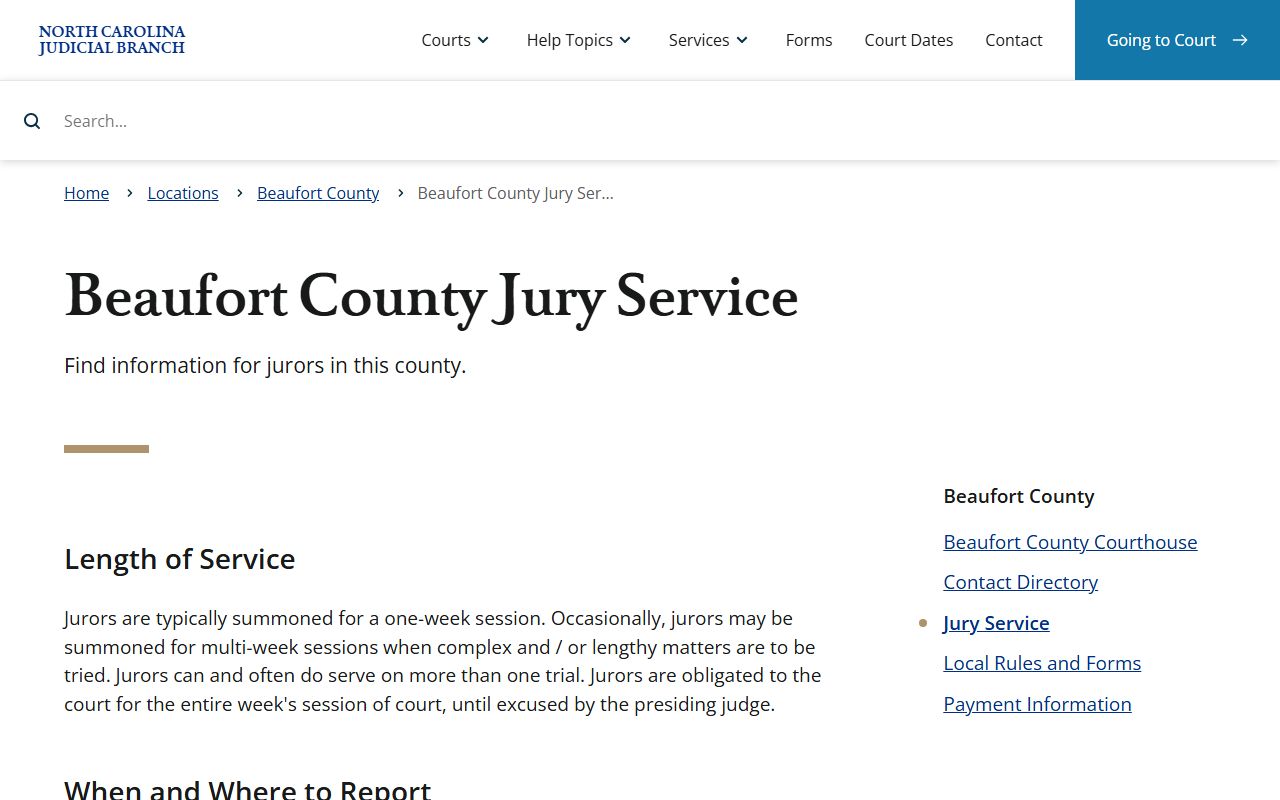
Jury service is not the same as a case docket, but it uses the same local courthouse structure and shows why official scheduling notices should be checked directly with the court.
Beaufort County Calendar Search Fields
The research inventory captured a specific calendar field set for North Carolina court calendars. Field behavior may vary by calendar type, but county and calendar type are the key starting points. A hearing date can move after a continuance, and calendars can be updated after notices are mailed, so users should verify close to the appearance date.
| Field | How to Use It |
|---|---|
| County | Select Beaufort County. This is the most important filter for local dockets. |
| Calendar Type | Choose civil or criminal where separate calendar paths are shown. |
| Date / Session | Use the date from a notice, citation, bond paper, summons, or attorney communication. |
| Courtroom / Judge | Use only if the calendar system displays it for the selected session. |
| Case Number | Best for matching a hearing to one exact case rather than a similar name. |
| Party or Defendant Name | Useful when the file number is unknown; compare results carefully. |
| Search / View | Opens the calendar or docket list after required filters are selected. |
Courts That Generate Beaufort County Dockets
North Carolina does not use a separate Beaufort County court-at-law system or justice-of-the-peace court system. Beaufort County matters move through the statewide General Court of Justice. The local record vocabulary should be Superior Court, District Court, Clerk of Superior Court, Magistrates, District Attorney for Prosecutorial District 2, and Public Defender District 2.
- Superior Court: felony criminal cases, higher-value civil matters, civil jury trials, appeals from District Court, and will caveat proceedings.
- District Court: misdemeanors, infractions, traffic, small claims, domestic/family, juvenile matters, and lower-level civil cases.
- Magistrates: initial appearances, criminal process, small claims-related duties, bond-related steps, and other statutory duties.
- Clerk of Superior Court: court records, case files, estates, special proceedings, copies, payments, judgments, liens, and probate functions.
The Beaufort County local rules and forms page is a county-specific source for local court procedures and forms.
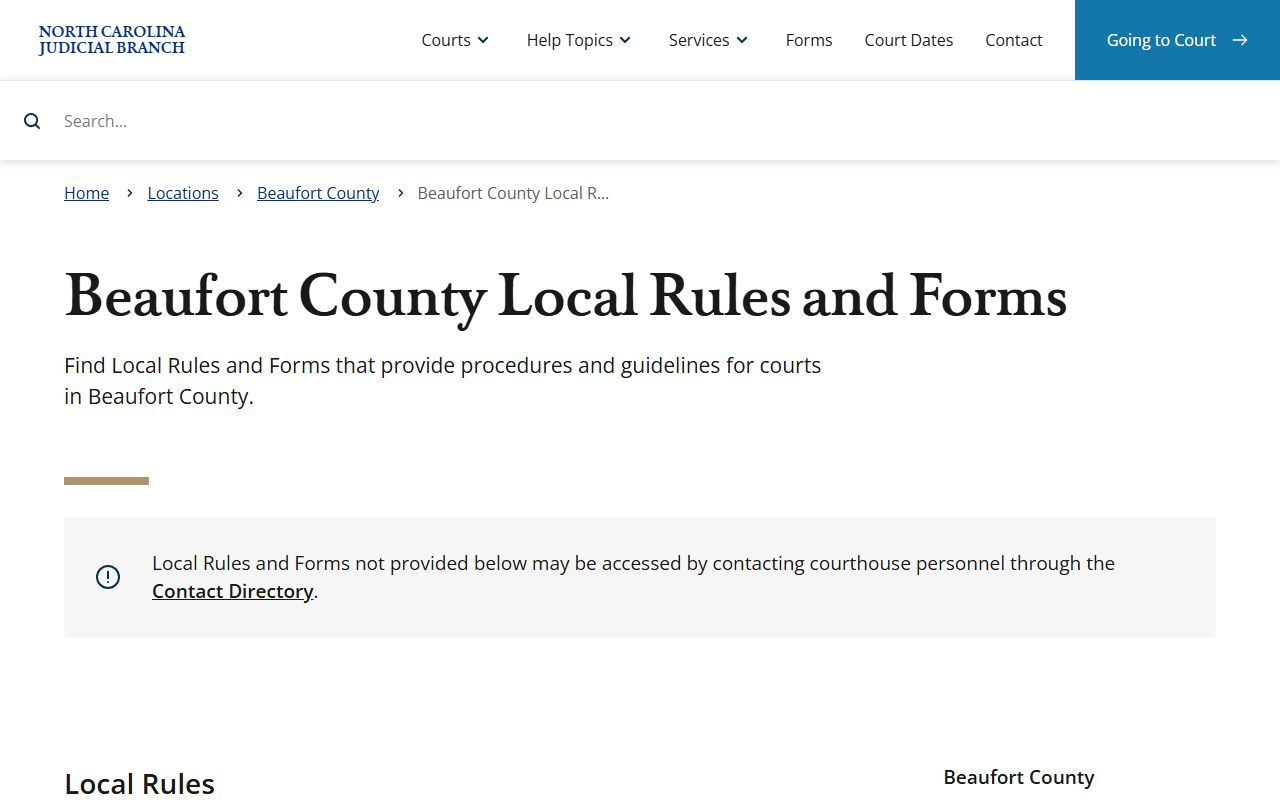
Local rules and forms help explain why a calendar entry may not tell the whole story about procedure, deadlines, mediation, or required paperwork.
Superior Court and District Court Sessions
Superior Court and District Court dockets answer different questions. A felony defendant may first appear in District Court after arrest but later proceed in Superior Court if the matter is indicted or otherwise prosecuted there. A misdemeanor or infraction usually stays in District Court and may be resolved by plea, dismissal, trial, waiver, or eligible payment. Civil claims route based on case type and jurisdictional rules. Small claims use magistrate and District Court processes, while larger civil matters and jury-trial civil cases may involve Superior Court.
The District Attorney for Prosecutorial District 2 handles state prosecutions for Beaufort, Hyde, Martin, Tyrrell, and Washington counties. That regional structure means a Beaufort County criminal docket may involve a prosecutor's office that serves multiple counties while still using the Washington courthouse for Beaufort cases. The Public Defender District 2 office is also regional, with Beaufort County representation handled through the Washington office when eligibility and appointment apply.
The Prosecutorial District 2 page names the district and explains the multi-county prosecutorial role.
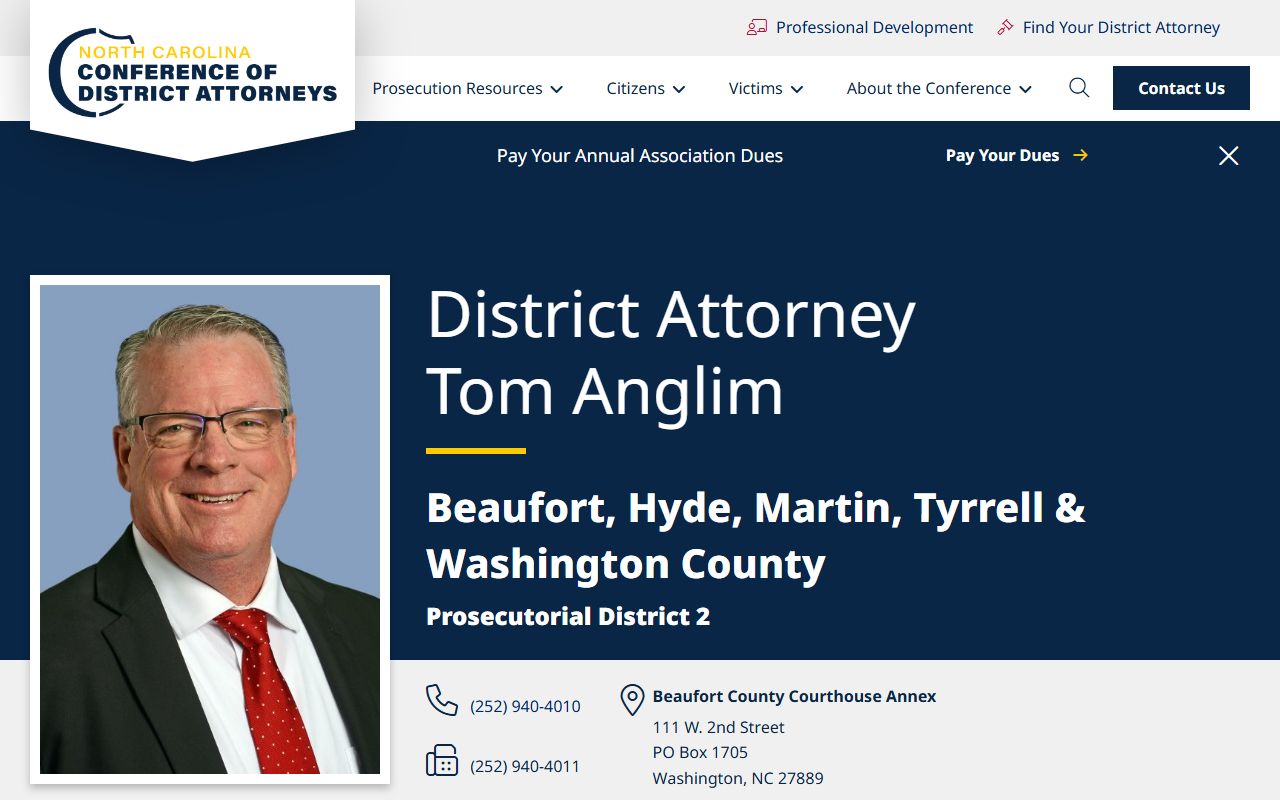
That district page is useful context for criminal calendars because the prosecutor's office is not a Beaufort-only agency even though the case may be heard in Washington.
Sample Beaufort County Docket and Hearing Fields
A docket or calendar entry should be read as a status snapshot. It may identify the case, hearing, court division, session, charge or claim, and next event. The same case may have many entries, including filing, service, continuance, motion, order, judgment, plea, dismissal, disposition, sentence, payment, or compliance events. The absence of a document image online does not mean the document does not exist in the clerk's file.
| Field | What It Shows |
|---|---|
| Case Number | The file number needed to match the docket to a case and request clerk copies. |
| Party / Defendant | The person, business, State party, plaintiff, defendant, petitioner, or respondent tied to the event. |
| Court Division | Superior Court, District Court, estates, special proceedings, traffic, or another category. |
| Hearing Date and Time | The scheduled appearance or session time, subject to later updates. |
| Session / Courtroom | The session, courtroom, judge, or calendar label if shown by the system. |
| Event Type | Filing, hearing, motion, order, continuance, plea, trial, disposition, sentencing, or payment event. |
| Status / Disposition | Pending, disposed, closed, dismissed, judgment, or other system-coded status where public. |
| Financial Data | Costs, fines, restitution, civil judgment amount, or payment eligibility when available. |
Continuances, Payments, and Updates
Calendar entries can change. A continuance postpones a hearing or trial. A payment may resolve an eligible infraction or traffic matter, but mandatory appearance offenses cannot simply be paid. A dismissal or disposition may appear after court action, and a sentence or judgment may be entered after plea, trial, or hearing. If a date is close, check the official calendar, Portal, mailed notices, attorney instructions, and the Clerk of Superior Court before relying on an older printed result.
Beaufort County's official payment page is precise about payment channels: by mail, use money order or certified check only, no cash and no personal checks, payable to Beaufort County Clerk of Superior Court. In person, cash, credit or debit card with processing fees, money order, or certified check may be accepted, but personal checks are not. Online payment uses a credit or debit card with processing fees when the case is eligible.
The January 3, 2025 Governor's appointment release documents the current District Attorney change for Prosecutorial District 2.
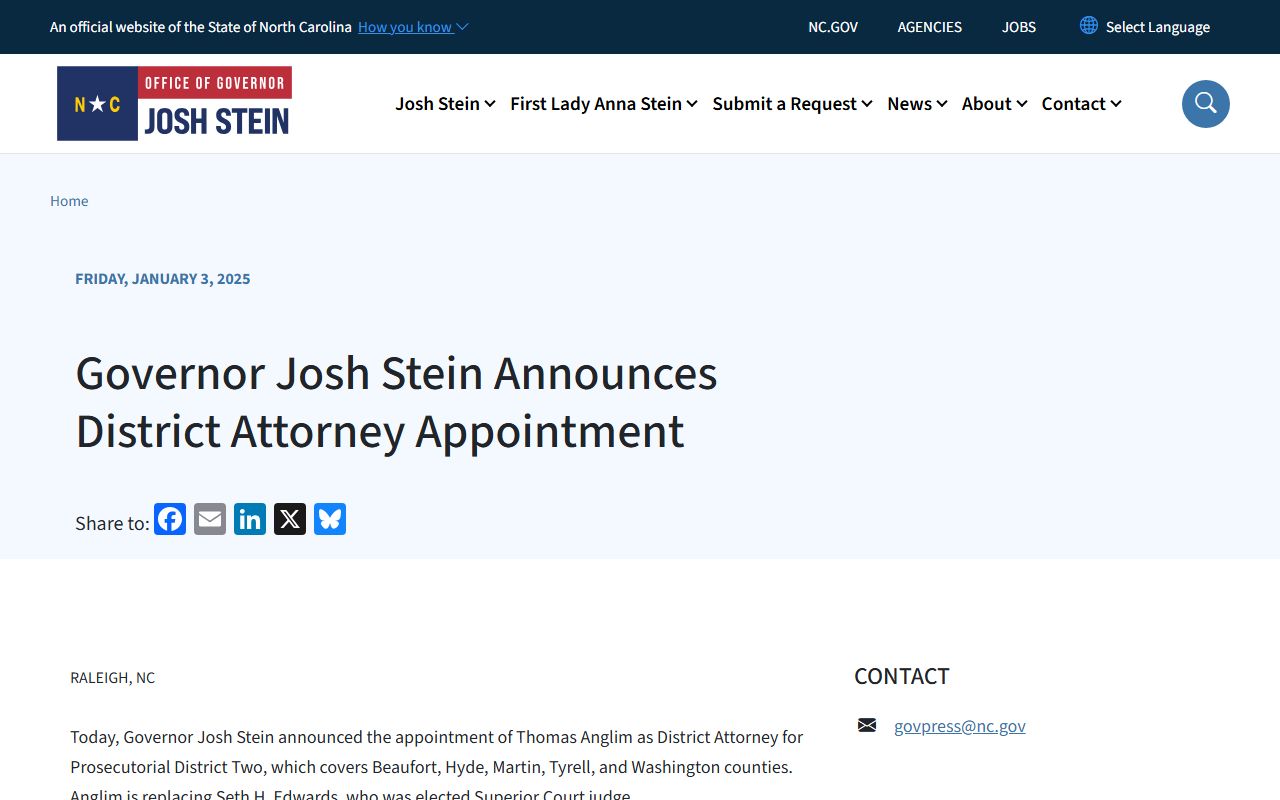
That official appointment context supports current criminal docket references to District Attorney Tom Anglim.
Local Courthouse Context for Docket Searches
Beaufort County's courthouse is in Washington at 112 W Second St, with the Clerk of Superior Court mailing address at PO Box 1403, Washington, NC 27889. The main courthouse phone is (252) 940-4000 and posted hours are Monday through Friday, 8:00 AM to 5:00 PM. The local contact directory lists the Superior Court judge at (252) 940-4016, District Court judges at (252) 940-4012, magistrates at (252) 940-4019, District Attorney at (252) 940-4010, and Public Defender at (252) 940-4014.
The official Beaufort County homepage is not a court docket database, but it provides local government context for county services, closures, and emergency information.
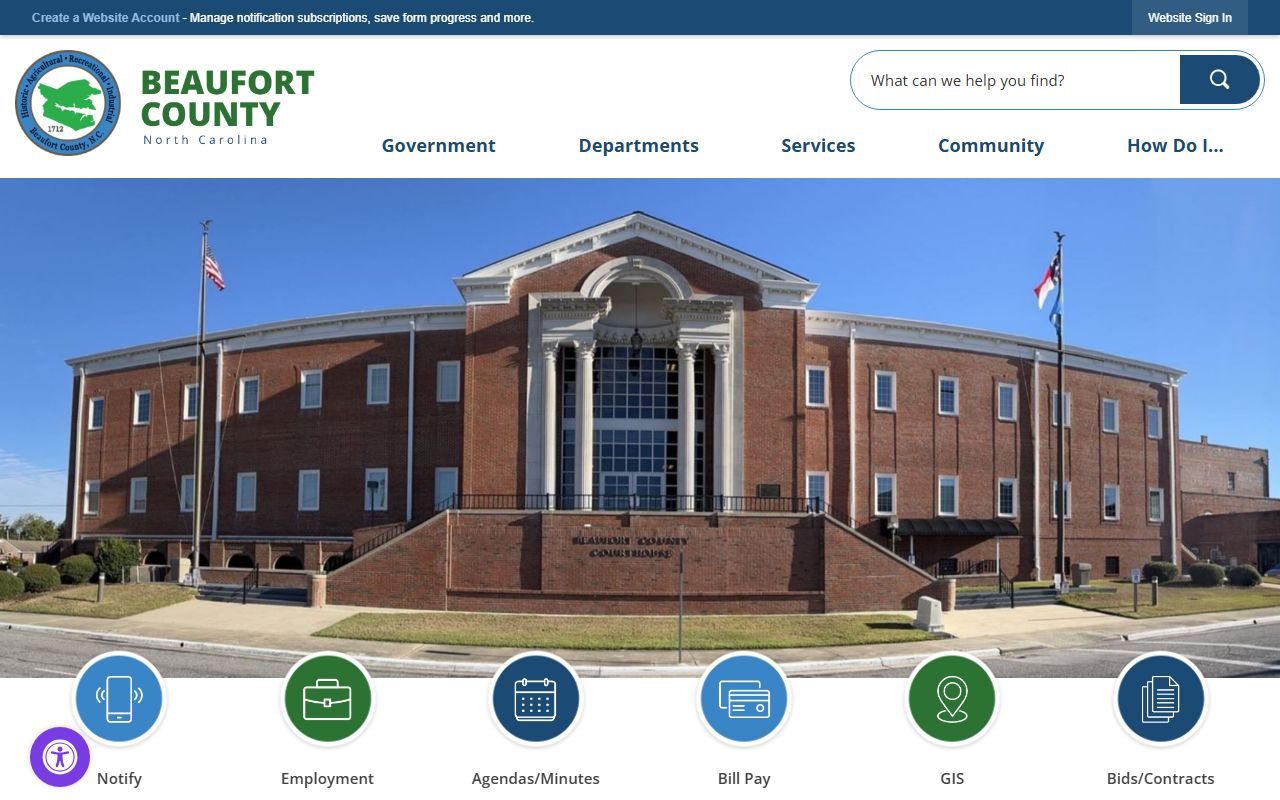
County emergency or closure information can matter in coastal eastern North Carolina when court operations are affected by weather, but case dates should still be verified through court channels.