
How to Search Beaufort County Court Records
The main public case search channel is the NC eCourts Portal. North Carolina completed statewide eCourts implementation in all 100 counties on October 13, 2025, so Beaufort County case access now fits into the statewide Enterprise Justice and Odyssey environment. Portal is used for public case information, court dates, and eligible payments. The Beaufort County Judicial Branch page also links court date tools and identifies the county as part of Prosecutorial District 2, Superior Court District 2, and District Court District 2.
Start with the court system when the record is a case file, docket entry, hearing, judgment, lien, foreclosure, eviction, partition, condemnation matter, criminal charge, estate case, or special proceeding. Use the Register of Deeds instead for deeds, real estate instruments, marriage records, and vital record indexes. Use law enforcement for police reports and jail booking information. This division matters because the Judicial Branch public-record request page routes people to the correct custodian rather than acting as a universal court-file request form.
- Confirm that the matter belongs in Beaufort County, North Carolina, and not another Beaufort County or a federal court.
- Open NC eCourts Portal and search by party name, case number, citation number, or county where the selected search path supports it.
- Select Beaufort County or narrow the search result by county to reduce statewide false matches.
- Use the case detail and calendar links to check filing date, court division, events, hearing dates, status, and payment eligibility.
- Contact the Beaufort County Clerk of Superior Court when the portal does not show the document image, certified copy, older file, divorce judgment, estate file, or complete case record needed.
The North Carolina court records help topic explains the public record framework for case files and clerk access. The screenshot assigned from that official page reflects the statewide guidance Beaufort County users rely on before deciding whether Portal, the clerk's office, or another custodian is the right path.
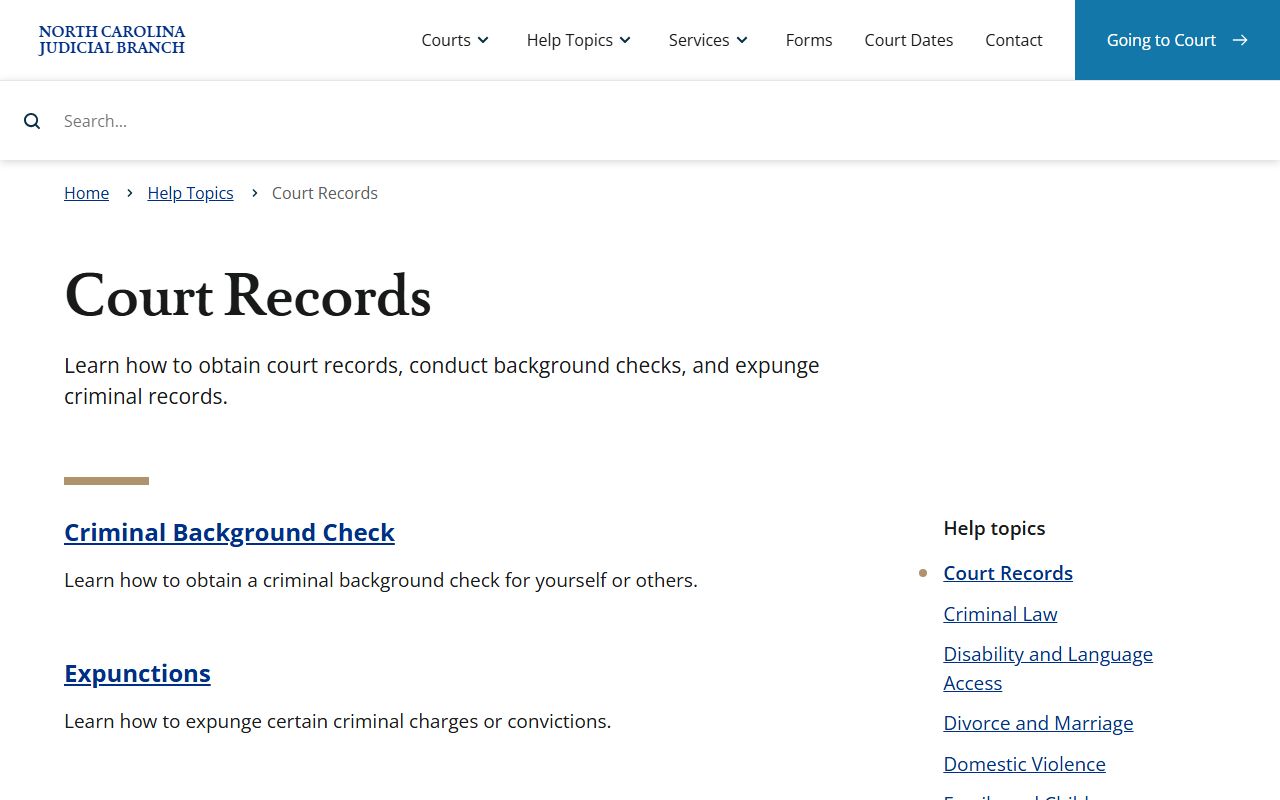
Use that help topic as the broad starting point, then switch to Beaufort County specific tools and the local Clerk of Superior Court for county case-file questions.
Beaufort County Court Records Search Fields
Portal and calendar searches are not the same screen, but the visible inputs documented in the research point to a common set of fields. Exact fields can vary by function, especially between court date lookup, citation payment, civil case lookup, and criminal case search. Case-number searches are the most precise when a file number is known. Name searches are useful when a person does not know the number, but common names can return unrelated statewide results unless Beaufort County is selected.
| Field Label | Type | Required | Notes / Format |
|---|---|---|---|
| Name / Party Name | Text | Unspecified | Use full or partial legal name where Portal permits; review matches carefully. |
| Case Number | Text | No | Best field when the exact Beaufort County file number is known. |
| Citation Number | Text | No | Used for traffic citation lookup, payment eligibility, and citation-based searches. |
| County | Dropdown / search | Recommended | Select Beaufort County to avoid statewide false positives. |
| Court Date / Date Range | Date | No | Used in court-date and calendar tools to narrow hearing results. |
| Case Category / Case Type | Dropdown / filter | Varies | May include criminal, civil, estates, special proceedings, infractions, domestic, and traffic categories. |
| Search / Submit | Button | Yes | Runs the selected search after fields are entered. |
| Reset / Clear | Button | No | Clears the form when displayed. |
The Judicial Branch guide to obtaining court records is the official fallback when public search fields do not produce the file or copy needed.
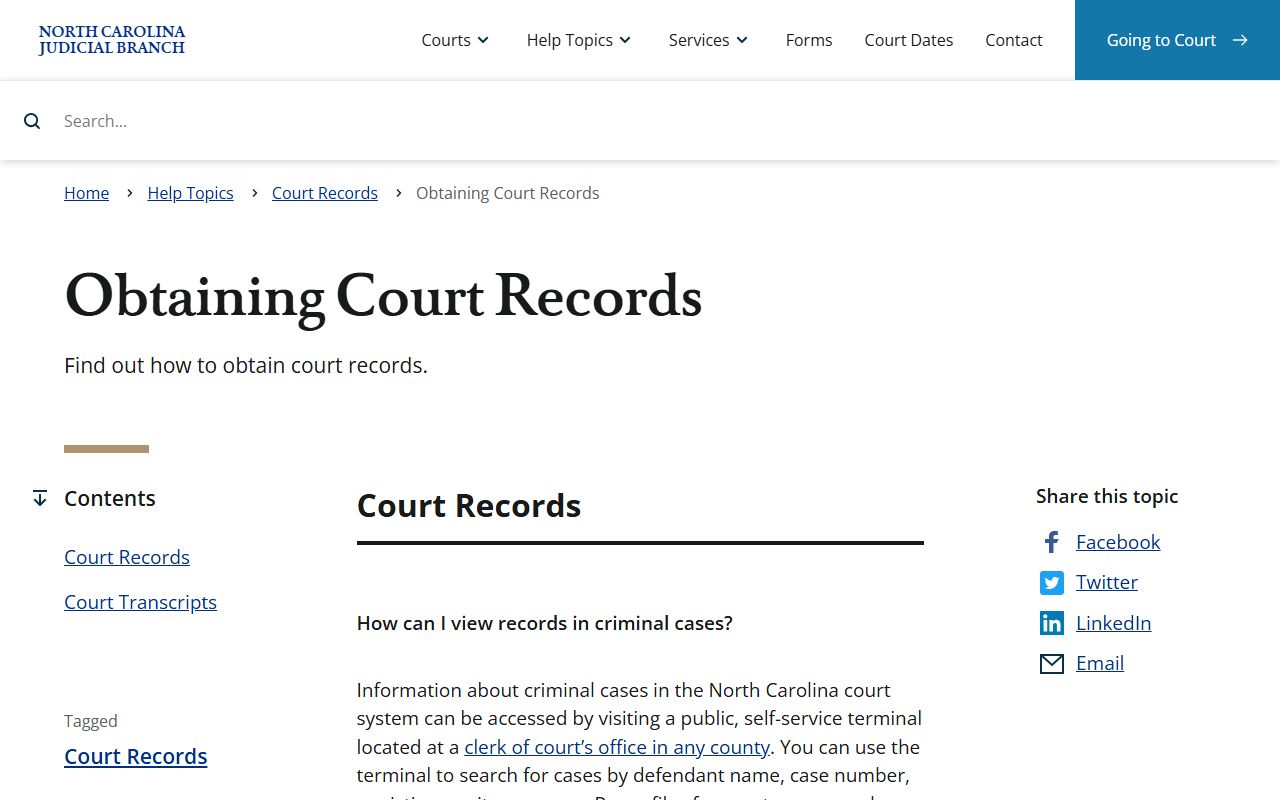
That clerk-centered guidance is especially important for certified copies, divorce judgments, complete case files, and older records not fully displayed online.
Types of Beaufort County Court Records
Beaufort County uses the North Carolina General Court of Justice structure. Superior Court handles felony criminal cases, higher-value civil matters, civil jury matters, some appeals from District Court, and will caveat proceedings. District Court handles misdemeanors, infractions, traffic, small claims, domestic matters, juvenile matters, and lower-level civil cases. The Clerk of Superior Court is the local record keeper for both trial divisions and also acts as Ex Officio Judge of Probate for estates and many special proceedings.
- Civil records: complaints, answers, summonses, service returns, motions, orders, judgments, liens, foreclosures, evictions, partitions, and condemnations.
- Criminal records: charges, warrants or orders for arrest after service where public, indictments, appearances, bonds, pleas, dispositions, sentencing, fines, costs, probation terms, and compliance events.
- Estate and special proceeding records: wills filed after death, estate applications, inventories, letters, accountings, clerk orders, partitions, guardianship-related matters, and other clerk-supervised proceedings.
- Traffic and infraction records: citation number, offense, court date, county, officer or agency, waiver or payment eligibility, disposition, fines, court costs, and possible DMV consequences.
- Family records: absolute divorce, custody, visitation, support, equitable distribution, domestic violence protective orders, and related motions or orders, with restrictions for adoption and some juvenile matters.
The local courthouse is the Beaufort County Courthouse, 112 W Second St, Washington, NC 27889. The courthouse mailing address is PO Box 1403, Washington, NC 27889, the main phone is (252) 940-4000, and current posted hours are Monday through Friday, 8:00 AM to 5:00 PM. Those details matter when an online search identifies a file but the user needs the official case record from the clerk.
What Beaufort County Court Records Show
A public case record is an index and event history for a court matter. It may identify the case, parties, attorneys, filed claims or charges, hearing activity, financial obligations, and disposition. It does not always provide every document image. Sensitive identifiers, sealed material, juvenile information, adoption records, medical details, and expunged records should not be expected in ordinary public search results.
| Field | What It Shows |
|---|---|
| Case Number / File Number | The unique court identifier used for precise searches and clerk copy requests. |
| County and Division | Beaufort County plus Superior Court, District Court, estates, special proceedings, or another case category. |
| Case Type | Criminal, infraction, civil, domestic, small claims, estates, special proceeding, judgment, lien, or traffic classification. |
| Party Names | Plaintiff and defendant, State and defendant, petitioner and respondent, decedent and representative, or creditor and debtor. |
| Attorneys | Lawyers of record and side represented when entered in the case-management system. |
| Filing Date | Date the case opened or the initiating document was filed. |
| Events | Filings, summons, service, hearings, continuances, motions, orders, judgments, pleas, dismissals, dispositions, sentences, and notices of appeal. |
| Financial Data | Costs, fines, restitution, payment eligibility, bond, civil judgment amounts, and fees where public. |
| Documents | Availability varies; clerk inspection and copy fees may be required. |
Public Access Framework for Beaufort County Court Records
North Carolina public access starts with G.S. 132-1, which defines public records broadly for government materials made or received in connection with public business. Court records also operate under Judicial Branch rules and court-specific statutes. The Remote Public Access Program cites G.S. 7A-109(d)-(e) and G.S. 7A-343.2 for statewide electronic court data access and technology funding authority.
For one-off public searches, Portal and the clerk are the ordinary access channels. For institutional, media, compliance, or research uses requiring broad statewide data, the Remote Public Access Program is a separate licensed data channel, not a replacement for a single public case lookup.
RPA helps explain why a commercial or institutional user may have a different access path than a Beaufort County resident checking one case through Portal or the clerk.
The RPA online access page describes real-time criminal and civil data access for approved users.
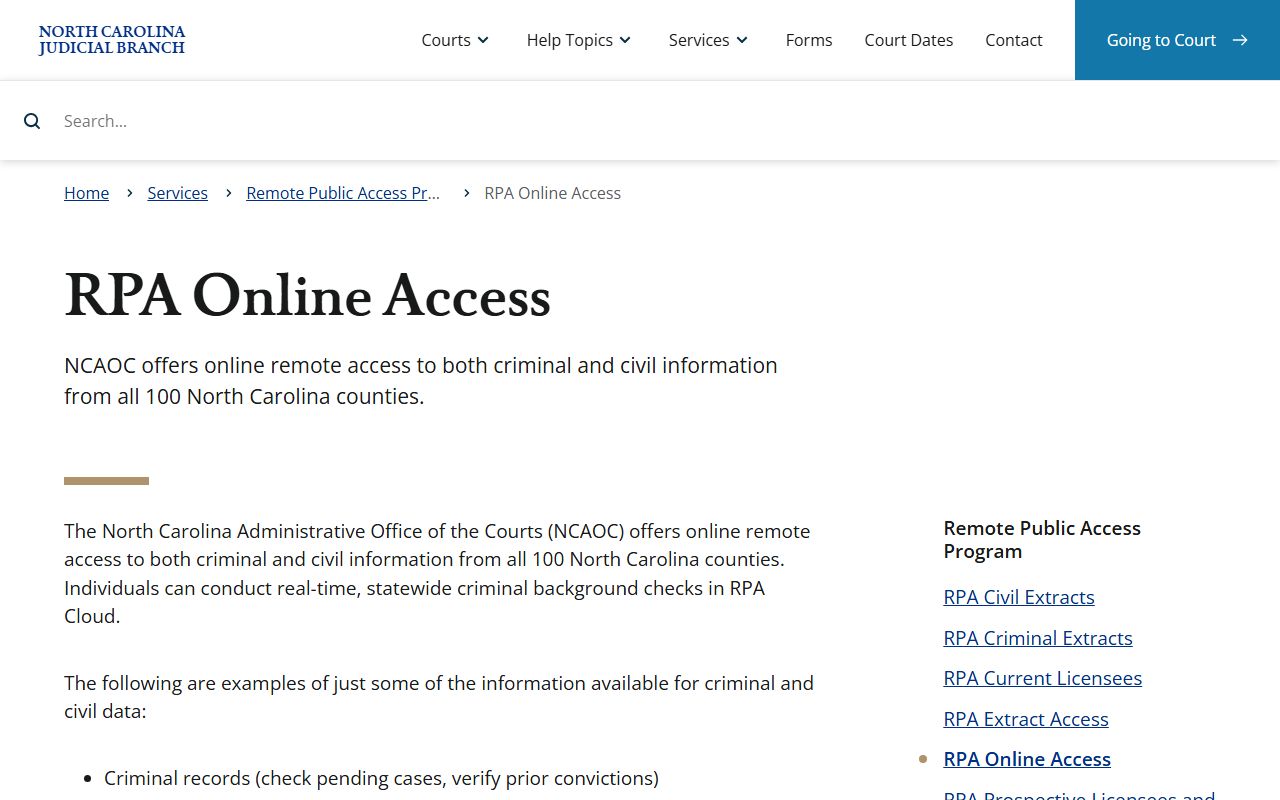
That service is best treated as a specialized statewide data product, while individual case documents still depend on Portal visibility and clerk-file access.
Note: Portal does not replace the clerk's official file, and background checks should not rely only on public portal results.
Copies, Certified Records, and Court Costs
Copies from the Beaufort County Clerk of Superior Court may require statutory clerk fees. The research file identifies the court-costs topic and current court-costs publication as the official places to verify copy charges, certified or exemplified copy fees, estate fees, and other miscellaneous clerk charges. Do not assume that viewing a public case index online means a certified court record is free.
The Judicial Branch court costs page explains that clerks charge fees for photocopies and miscellaneous services.
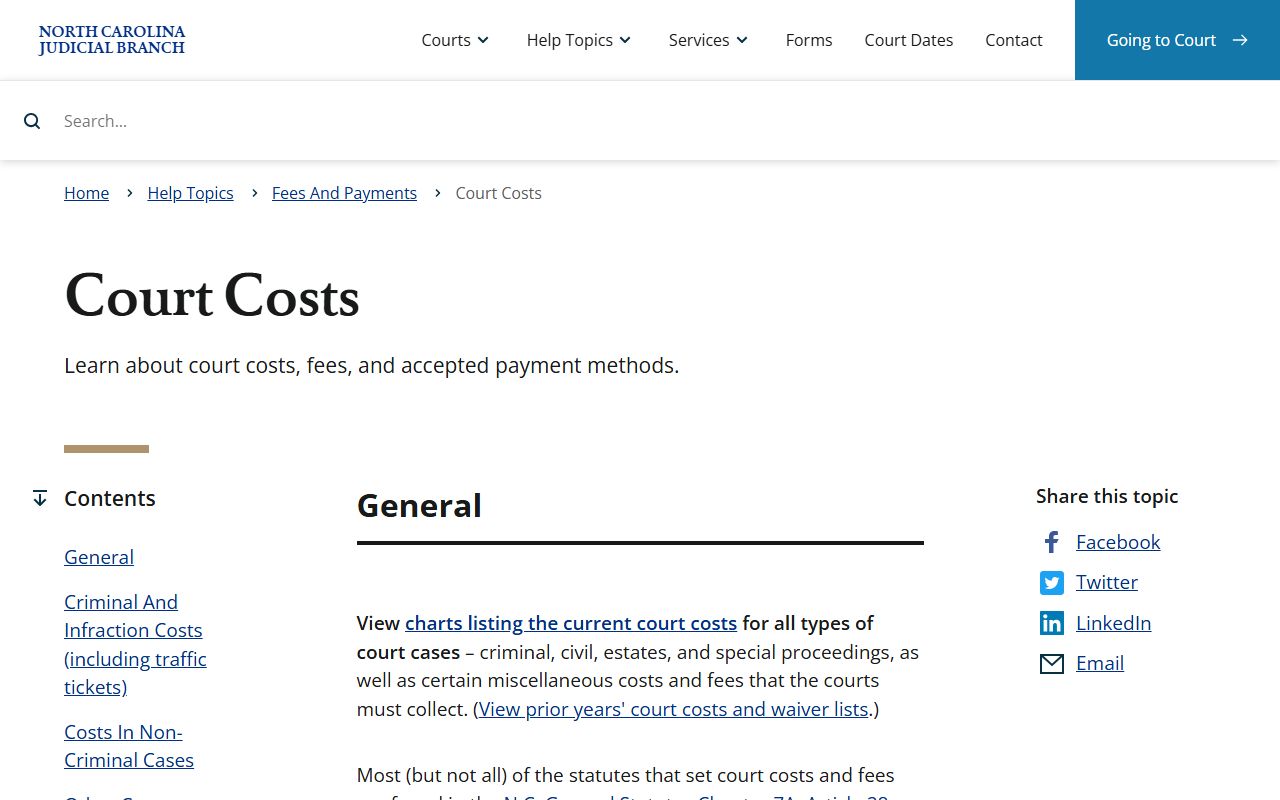
For payment-sensitive requests, use the official cost materials or call the clerk before mailing money.
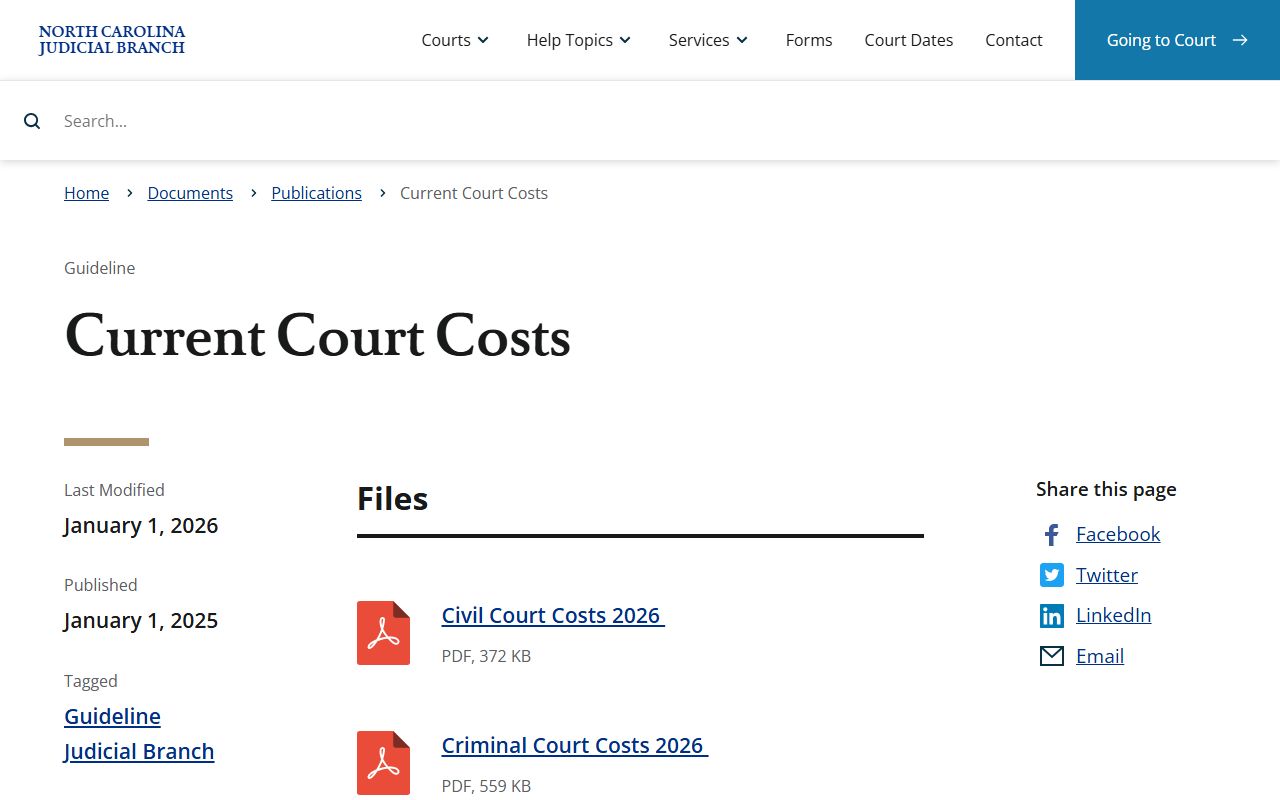
The current court costs publication is the source identified for 2026 civil, criminal, estates, and special proceedings fee schedules.
Beaufort County's local payment page says mail payments must be money order or certified check only, with no cash or personal checks, payable to Beaufort County Clerk of Superior Court. In-person payment may include cash, credit or debit card with processing fees, money order, or certified check, but no personal checks.
Records That Are Sealed or Confidential in Beaufort County
Juvenile court record information is confidential under G.S. 7B-3000 and should not be treated as ordinary public criminal data. Adoption records are confidential. Mental health, incompetency, guardianship medical details, evaluations, and treatment information may be restricted. Domestic violence protective order cases are court records, but protected addresses, minor information, and safety-sensitive filings may be redacted or limited.
Sealed and expunged records are also different from normal public files. An expunction under G.S. 15A-145.5 may apply to certain nonviolent misdemeanor and felony convictions when statutory eligibility is met, and other expunction statutes may apply to dismissed charges, not-guilty outcomes, age-based first offenses, or drug-related categories. A person pursuing expunction should identify exact Beaufort County case numbers, charges, disposition dates, and outcomes, then use the appropriate AOC form and file through the Clerk of Superior Court in the county of conviction.
For online images, Beaufort County's Register of Deeds posts the G.S. 132-1.10(g) notice allowing written requests to remove specified personal identifying numbers from online copies, including Social Security, taxpayer ID, driver license, state ID, passport, bank account, credit or debit card, PIN, and password information.
In-Person Court Record Requests
Visit or contact the Beaufort County Clerk of Superior Court when a search result points to a record that needs official inspection, certification, or a complete document file. Bring or provide the case number when possible, party names, approximate filing date, case type, and the kind of copy needed. For criminal matters, include the defendant name and file number if available. For civil and estate matters, identify the party, decedent, judgment, lien, foreclosure, eviction, partition, condemnation, or estate file as specifically as possible.
Beaufort County Clerk of Superior Court
112 W Second St
Washington, NC 27889
(252) 940-4000
Monday-Friday, 8:00 AM-5:00 PM