
Beaufort County Probate Court Role
North Carolina probate is not assigned to a separate probate courthouse in Beaufort County. The elected Clerk of Superior Court acts as probate judge, and assistant clerks hold most estate hearings and preside over most estate cases. The local probate access point is the Clerk of Superior Court at the Beaufort County Courthouse, 112 W Second St, Washington, NC 27889. The phone number published for the clerk and courthouse is (252) 940-4000.
Probate records in Beaufort County can include wills filed after death, applications for estate administration, preliminary inventories, letters testamentary, letters of administration, accountings, orders, creditor filings, receipts, releases, and estate closing papers. If a will's validity is challenged in a caveat, that contested will proceeding goes before a Superior Court judge rather than remaining only with an assistant clerk.
Clerk of Superior Court acting as Ex Officio Judge of Probate
Beaufort County Courthouse
112 W Second St
Washington, NC 27889
(252) 940-4000
Monday-Friday, 8:00 AM-5:00 PM
The North Carolina estates guide explains the clerk's probate role statewide.
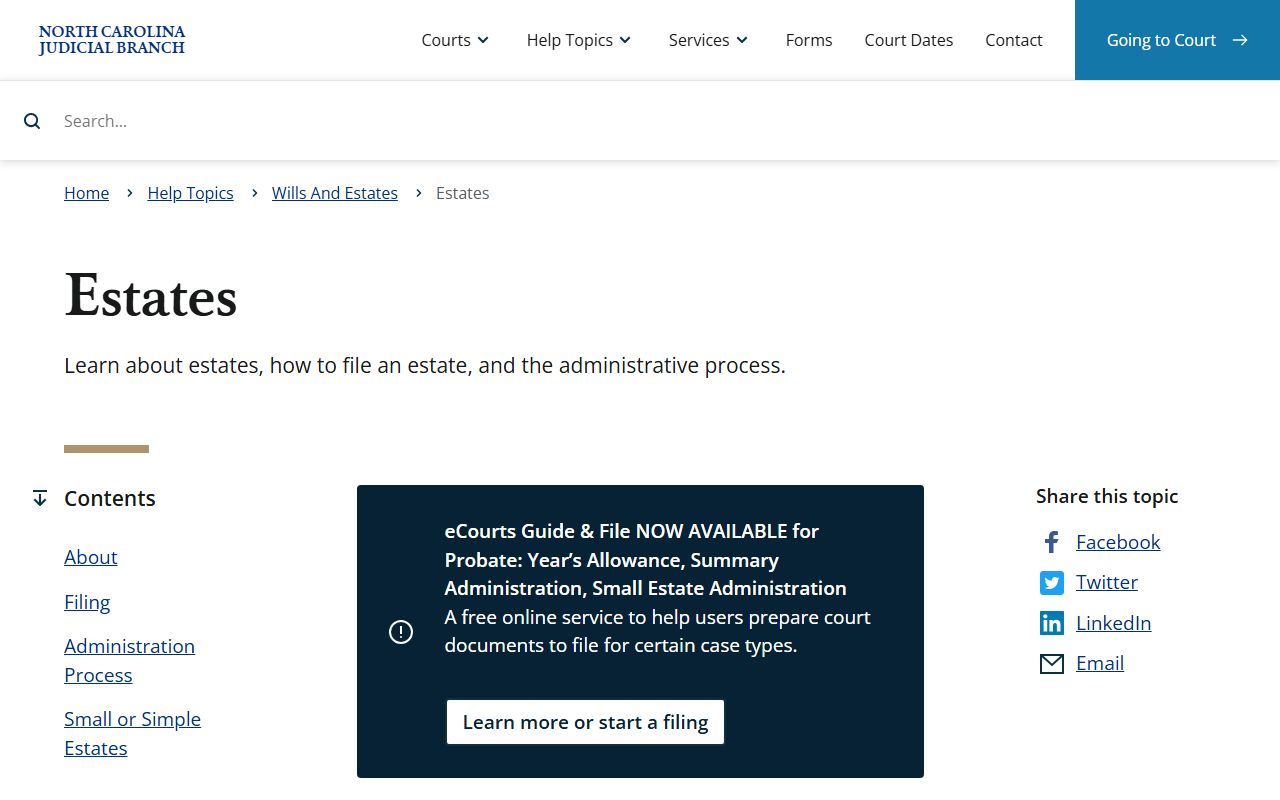
That statewide rule is the reason Beaufort County estate searches center on the clerk, not on a separate probate court name.
Beaufort Probate Terms Defined
Probate filings use terms that affect both search results and office requests. These definitions are narrow, practical meanings for Beaufort County probate records and estate searches.
- Testator
- The person who made a will.
- Executor
- A person named in a will to carry out estate duties after the clerk issues authority.
- Intestate
- Dying without a valid will, which can lead to administration under North Carolina succession rules.
- Letters testamentary
- Authority document issued by the clerk to a personal representative named under a will.
- Letters of administration
- Authority document issued when an administrator is appointed, often in an intestate estate.
- Guardianship
- A court-supervised proceeding for a person or property interest needing legal protection, with some records restricted.
- Conservatorship
- A protective proceeding for managing an adult's property or financial interests when court authority is required.
Public Filed Wills in Beaufort
A formal reading of the will is not required in North Carolina. After someone dies, the will may be filed with the clerk of court, and a decedent's will becomes a public record when filed after death. Any person may view a public record or request a copy for a fee, although sensitive personal data can be redacted and some related proceedings can be restricted.
Before filing or searching an estate, gather the original will if one exists, the certified death certificate, and asset information. A person may also have deposited a will for safekeeping with a clerk before death. If no will is found in Beaufort County, it can be reasonable to check counties where the decedent formerly lived, because the research notes that safekeeping deposits may be county-specific.
The decedent estate procedures pamphlet is the official publication tied to North Carolina estate administration.
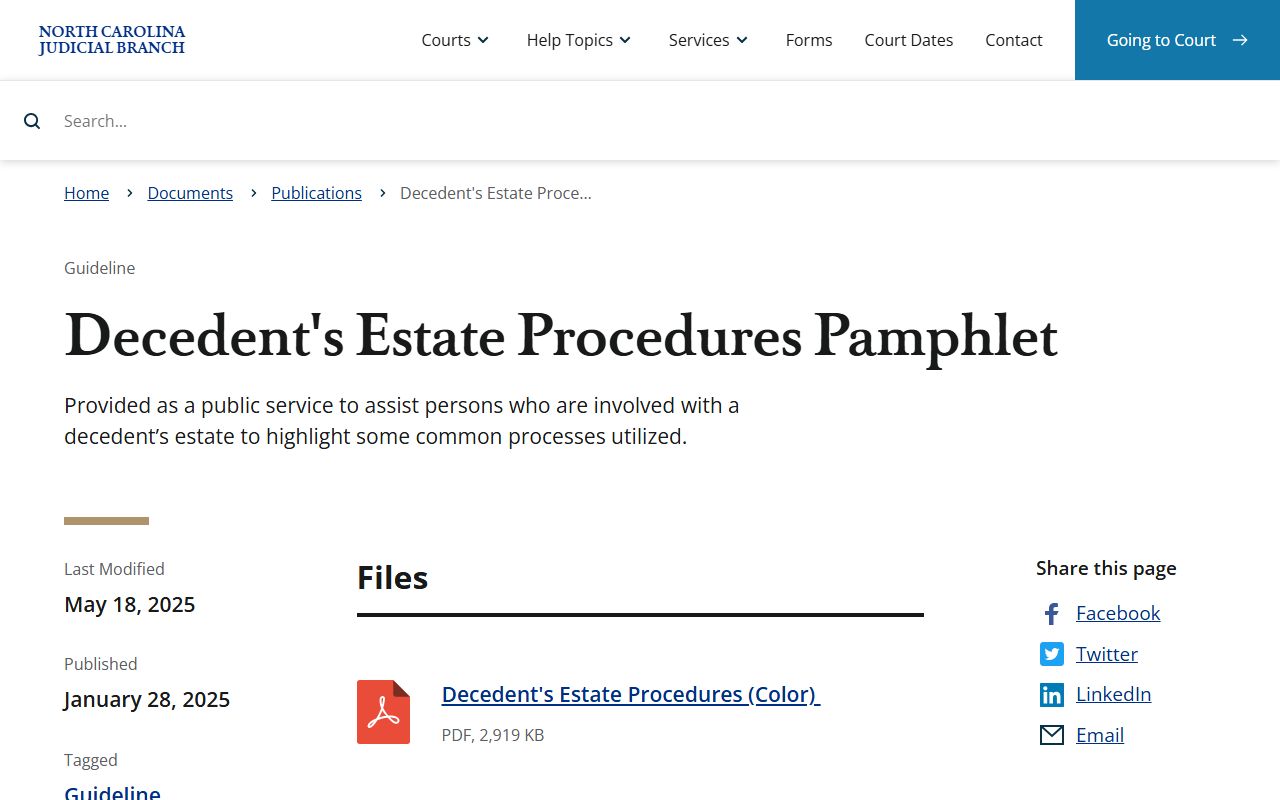
The pamphlet supports the same filing path used for Beaufort County estate records at the Clerk of Superior Court.
Search Beaufort County Probate Records
Probate access in Beaufort County has several channels. NC eCourts Portal may show estates case information where public. Clerk public terminals can show civil, special proceeding, and estates information. The actual file for an estate, filed will, certified copy, or older paper record is handled through the Clerk of Superior Court in the county where the estate case is located.
- Confirm the decedent's domicile or Beaufort County property connection.
- Search NC eCourts Portal by name, case number, and county when public case information is available.
- Use the clerk's public terminal for estates or special proceedings information that is not complete online.
- Visit or contact the Beaufort County Clerk of Superior Court for file inspection, filed wills, and certified copies.
- Use the Register of Deeds only for related deeds or vital records, not estate administration.
| Channel | What it covers | Notes |
|---|---|---|
| NC eCourts Portal | Estates case information where public | Search by name, case, and county when available. |
| Clerk public terminal | Civil, special proceeding, and estates information | Judicial Branch says these terminals are in clerk offices. |
| Clerk file inspection | Estate files and filed wills | Visit the clerk where the case is located. |
| Mail or copy request | Copies and certified copies | Fees apply. Call (252) 940-4000 for current procedure. |
| Register of Deeds | Real estate and vital records | Useful for deeds, death, and marriage records related to an estate. |
Start Beaufort Estate Administration
Formal estate administration begins with the appropriate clerk. For Beaufort County, that means bringing the will if one exists, a certified death certificate, the application or preliminary inventory, and the $120 filing fee to the Clerk of Superior Court. The estate generally belongs in the county where the decedent was domiciled at death. If the person was not domiciled in North Carolina, administration may occur in a North Carolina county where the decedent left property or where estate property later came.
| Item | Amount / access rule | Source detail |
|---|---|---|
| Formal estate administration filing | $120 filing fee | Bring application/preliminary inventory to begin formal administration. |
| Plain estate copies | Fee required | Any person may request a copy of a public filed will or estate record for a fee. |
| Certified estate copies | Fee required | Contact the clerk for current certified-copy procedure. |
| Public terminal access | Available at clerk office | For public civil, special proceeding, and estates information. |
| Restricted records | Not ordinary public access | Guardianship, mental health, juvenile, sealed, or redacted data may be limited. |
Beaufort Probate Record Fields
A Beaufort County probate file can be broader than a will. Estate records may show the decedent's name, date of death, domicile, will or codicil, application for probate or administration, preliminary inventory, representative details, bond if required, notices, claims, inventories, accountings, clerk orders, receipts, releases, and estate closing filings.
| Field or document | What it may show |
|---|---|
| Decedent name and domicile | Identity and county connection for administration. |
| Will or codicil | Filed testamentary document after death, if one exists. |
| Preliminary inventory | Asset categories used to start administration. |
| Personal representative | Executor or administrator name and address. |
| Letters | Authority issued by the clerk for estate action. |
| Accountings and orders | Administration events, clerk rulings, and closing steps. |
Estate Records and Vital Copies
Probate files often require proof from other custodians. Death certificates, marriage records, and divorce certificates are vital-record items, not probate pleadings. The Beaufort County Register of Deeds or North Carolina Vital Records may be needed for those documents, while the estate file itself stays with the Clerk of Superior Court. Certified vital-record copies are subject to vital-record access rules.
The NC Vital Records divorce certificate page helps separate certificate requests from court-file requests.
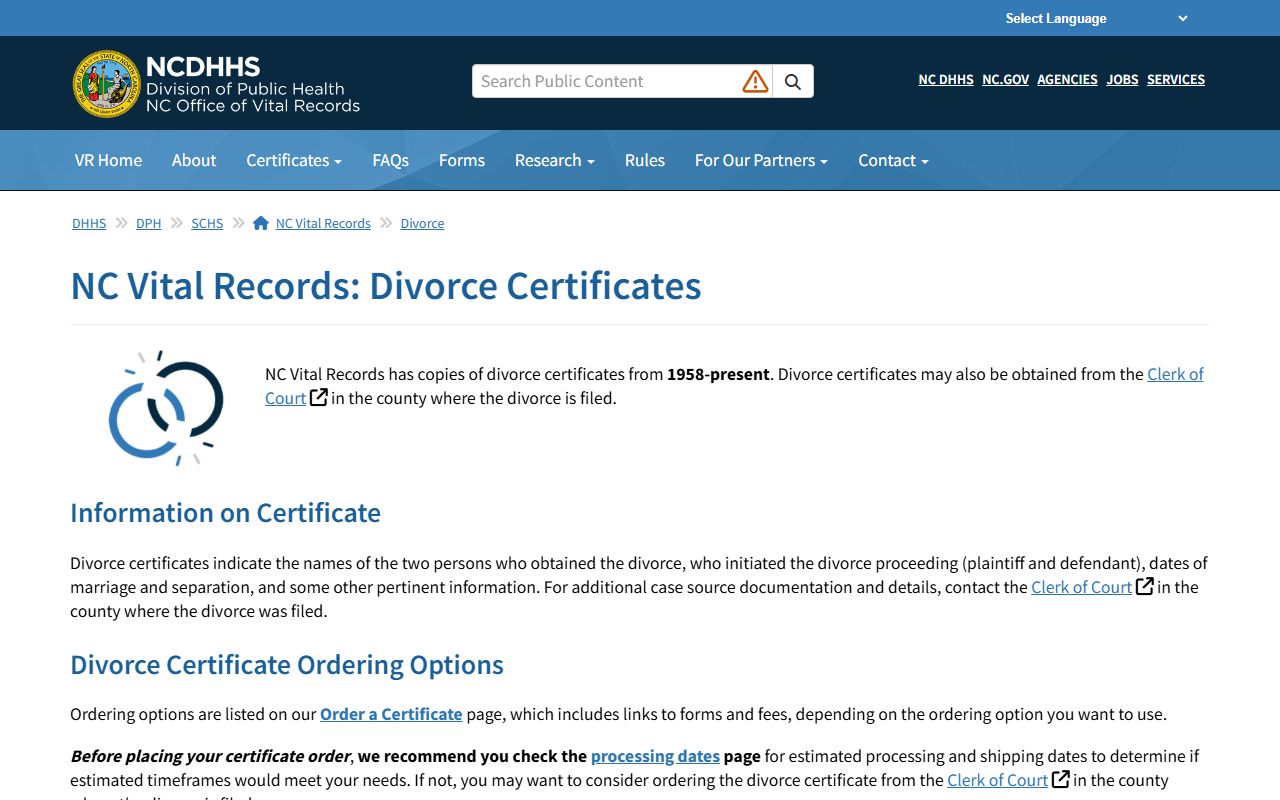
That distinction is useful when an estate file requires proof of family status or a prior divorce.
The NC Vital Records ordering page states that vital records are not free public records.
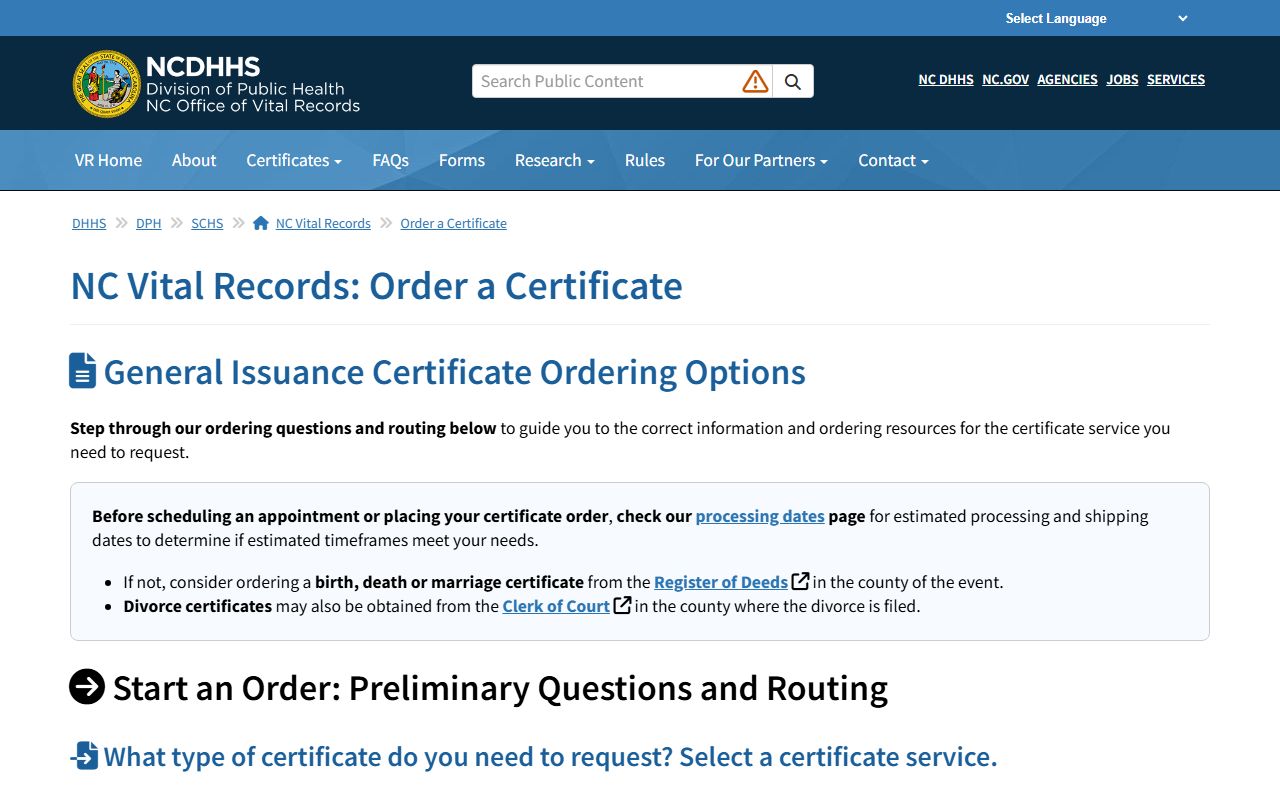
Use vital-record ordering for certificates and the clerk's probate channel for filed wills, estate files, and letters.
Restricted Beaufort Probate Details
Most filed wills and many estate records become public after filing, but not every probate-adjacent record is fully open. Guardianship, incompetency, mental health, juvenile, sealed, or safety-sensitive filings may be restricted. Online images can also be redacted when they contain protected personal identifiers. Beaufort County's Register of Deeds posts a privacy-removal notice for certain numbers in online official-record images, and the same research warns against expecting sensitive data to remain visible online.
Note: A public index match does not guarantee that every image, medical detail, financial number, or guardianship document is available online.