
Criminal Court Records in Beaufort County
A criminal court record is the case-level record kept by the Clerk of Superior Court after a criminal matter is filed. It can begin with a citation, warrant, order for arrest, criminal summons, indictment, or other criminal process, then grow as the case moves through hearings, motions, plea negotiations, trial, disposition, sentence, payment, probation, and compliance events. The record is not limited to the first charge and it is not the same thing as a sheriff booking record.
Beaufort County criminal cases use the North Carolina General Court of Justice. District Court handles misdemeanors, infractions, traffic, and many early criminal events. Felonies often begin with arrest and initial appearance before moving through probable cause, indictment, arraignment, plea, trial, and sentencing in Superior Court if prosecuted as felonies. The Clerk of Superior Court is the local record keeper for both divisions at the Beaufort County Courthouse in Washington.
The Public Defender District 2 page at NC Indigent Defense Services identifies Beaufort County's defender district and public defender resources.
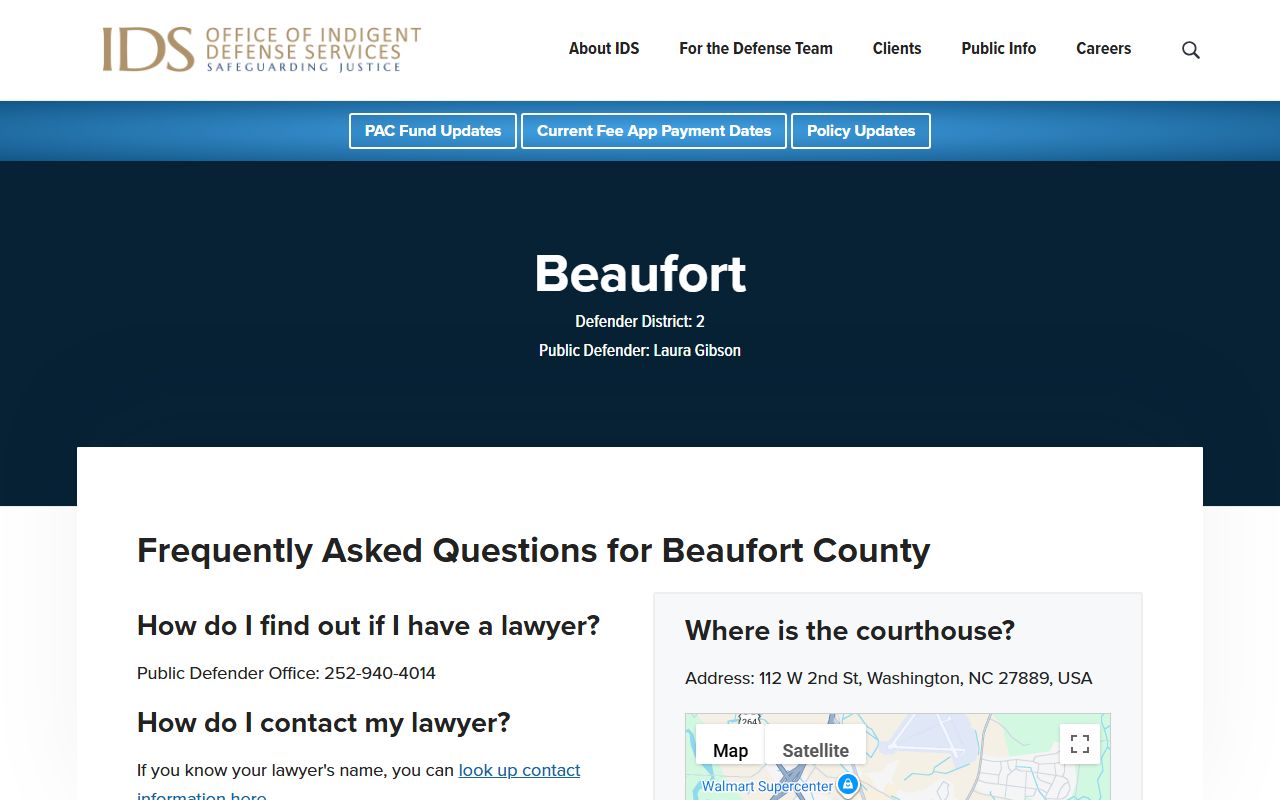
That source is relevant because criminal court records often show appointed counsel or representation events, but the public defender is a representation office, not a case-record custodian.
How to Search Beaufort County Criminal Court Records
Use NC eCourts Portal first for public criminal case information, court dates, and eligible payments. Search by defendant name, case number, citation number, and county where the portal path supports those fields. Select Beaufort County to avoid unrelated statewide results. For broader all-record context, the main Beaufort County court records page explains how Portal, calendars, the clerk, and RPA fit together.
- Open NC eCourts Portal and choose the case or criminal search path available to the public.
- Search by exact case number when known, or use defendant name with Beaufort County selected.
- Review the case category, court division, filing date, charge list, event history, and hearing dates.
- Open each charge or event detail shown by the portal before treating the case as resolved.
- Request certified copies, older paper records, or complete file inspection from the Beaufort County Clerk of Superior Court.
Portal can be enough for basic status and calendar checks. It is not always enough for legal proof, certified copies, complete documents, or background-check-grade review. The Judicial Branch research notes that individuals performing background checks should use the county clerk's office rather than relying only on Portal.
Criminal Case Flow
A criminal case record changes as the case moves. One arrest can produce several charges. Some charges may be amended, reduced, dismissed, superseded by indictment, or resolved by plea. A felony record may show District Court events before the Superior Court file becomes the main prosecution record. A misdemeanor may remain in District Court from first setting through final disposition.
Case flow: Arrest or Citation › Initial Appearance › Charges Filed › Probable Cause or Indictment › Arraignment › Motions › Plea or Trial › Disposition › Sentencing › Compliance or Appeal
| Stage | What Happens |
|---|---|
| Arrest / Citation | Law enforcement initiates custody or citation; jail custody information remains separate from the court case file. |
| Initial Appearance | A magistrate or judicial official addresses release conditions, bond, and next court steps. |
| Charges Filed | The accusation enters the court record and receives a case number or related file entry. |
| Probable Cause / Indictment | Felony matters may move toward Superior Court through probable cause review or grand jury indictment. |
| Arraignment | The defendant is formally advised of charges and plea or status is addressed. |
| Motions | Attorneys file requests about evidence, suppression, discovery, continuances, bond, or procedure. |
| Plea or Trial | The case resolves by plea, bench trial, jury trial, dismissal, or other disposition. |
| Sentencing | The court imposes judgment, custody, probation, costs, fines, restitution, or other conditions after conviction. |
What a Beaufort County Criminal Court Record Shows
Public criminal case fields come from the case-management system and the clerk's file. A record can show basic public identifiers and events even when document images are limited. Searchers should read the full charge list rather than assuming the first line is the final outcome. A dismissed charge, guilty plea, not-guilty result, probation violation, failure-to-appear event, or amended charge can each change the meaning of the record.
| Field | What It Shows |
|---|---|
| Case Number | The official file number used for Portal searches and clerk copy requests. |
| Defendant | The person accused in the criminal case, subject to privacy restrictions for protected categories. |
| Court Division | District Court for many misdemeanors, infractions, and early events; Superior Court for felonies and related proceedings. |
| Charges | Alleged offenses, statutes, offense dates, charge dates, and later amendments or reductions. |
| Bond / Release | Bond amount, secured or unsecured terms, written promise, or other release conditions where public. |
| Hearings | Date, time, session, county, judge, courtroom, continuance, or calendar event. |
| Plea | Defendant response or negotiated plea when entered by the court. |
| Disposition | Dismissed, guilty, not guilty, judgment, deferred, closed, pending, or other coded outcome where public. |
| Sentence | Custody, probation, fines, costs, restitution, compliance conditions, or other judgment terms after conviction. |
| Attorneys | Private counsel, appointed counsel, prosecutor, or public defender events if entered. |
Charges vs Convictions
A charge is an accusation. A conviction is a guilty finding or accepted guilty plea. Beaufort County criminal court records can show charges that were filed but later dismissed, reduced, amended, or resolved without conviction. That is why the disposition field matters as much as the offense field. The charge page explains the arrest-to-charge path in more detail for users focused on arrest records and court charges.
| Charge | Conviction | |
|---|---|---|
| Meaning | Formal accusation that a statute or ordinance was violated. | Guilty plea or finding accepted by the court. |
| Proof Point | Probable cause or charging decision. | Beyond reasonable doubt at trial or valid plea. |
| Record Status | May remain visible unless dismissed, sealed, expunged, juvenile, or otherwise restricted. | May remain visible unless sealed or expunged under applicable law. |
| Practical Use | Shows what was alleged and tracked by the court. | Shows final criminal liability and sentence, if any. |
District Attorney and Public Defender Roles
Law enforcement may arrest and book a person, but the State prosecutes criminal charges through the District Attorney. Beaufort County is in Prosecutorial District 2, which covers Beaufort, Hyde, Martin, Tyrrell, and Washington counties. The official district page and the Governor's January 3, 2025 press release identify Tom Anglim as District Attorney for Prosecutorial District 2. The Beaufort contact directory lists the District Attorney phone as (252) 940-4010, and official listings place the office at 111 W Second Street or PO Drawer 1705 in Washington.
The public defender is different. NCIDS lists Defender District 2 and Public Defender Laura Gibson, with the office at 227 N Respess Street, Washington, NC 27889, phone (252) 940-4014, and fax (252) 940-4015. Public defense helps eligible defendants through public defender offices, contract attorneys, and appointed private counsel. It does not provide public case records, certified copies, or general background checks.
The statewide defender directory gives the Public Defender District 2 office details.
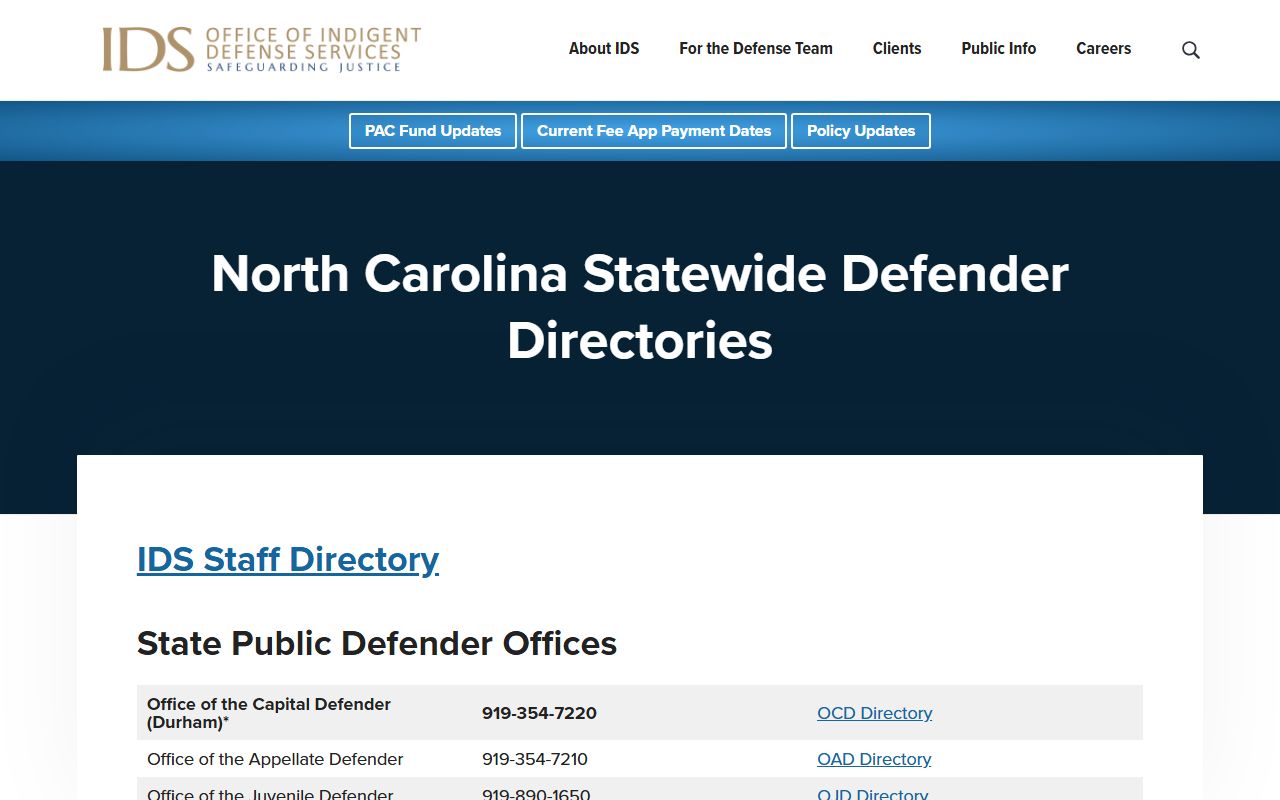
Use defender contact information for representation questions, while records questions still go to Portal or the Clerk of Superior Court.
The Indigent Defense Services statute article supplies the legal framework for appointed defense services.
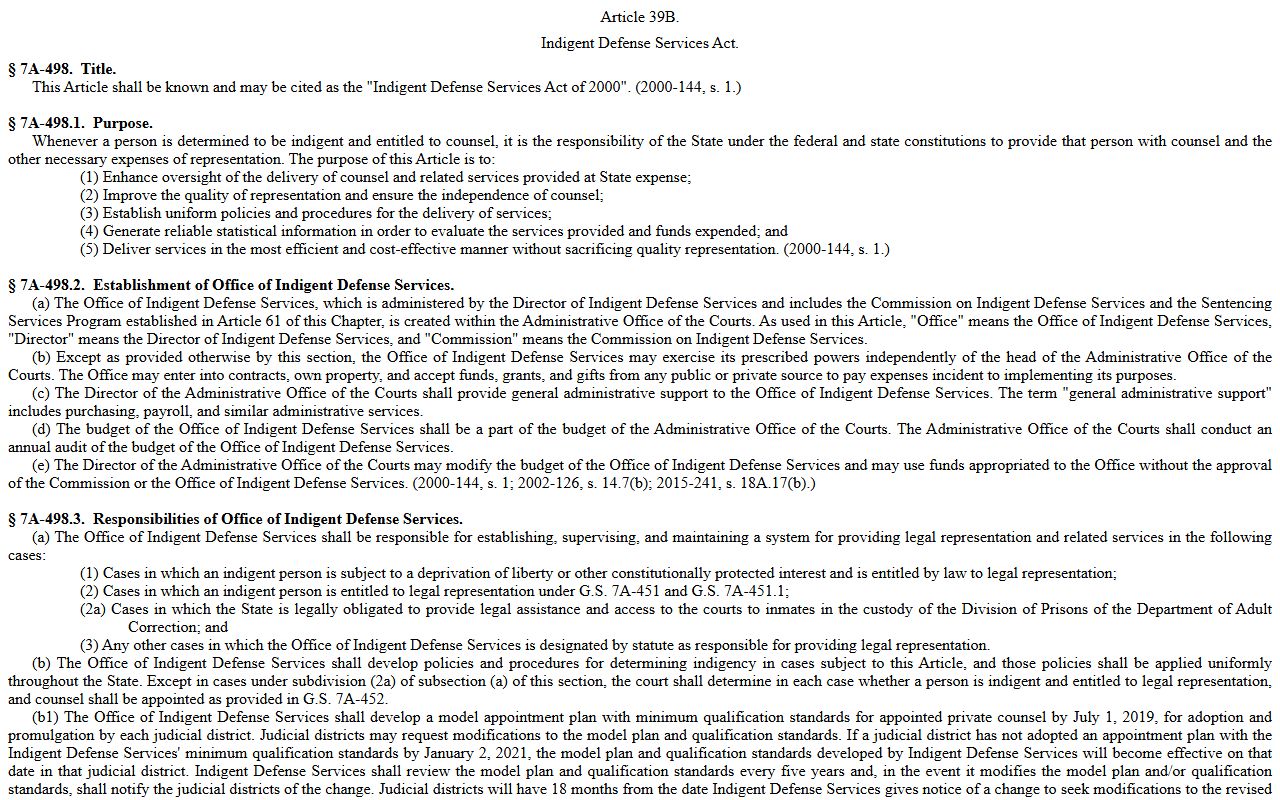
That statute context helps separate legal representation from the public's search for court records.
Sealed vs Expunged Records
Sealed and expunged records should not appear in ordinary public search results. Sealing closes a record from routine public inspection by law or court order. Expunction is legal relief that removes eligible records from public view under statute. North Carolina has multiple expunction pathways, and G.S. 15A-145.5 covers certain nonviolent misdemeanor and felony convictions if strict eligibility requirements are met.
| Sealed | Expunged | |
|---|---|---|
| Visibility | Closed from ordinary public inspection. | Removed from ordinary public access by court order. |
| How It Happens | By statute or court order for protected case categories. | By petition and court order under an applicable expunction statute. |
| Examples | Juvenile, adoption, some mental health, and court-sealed matters. | Certain dismissed charges, not-guilty outcomes, first offenses, or eligible nonviolent convictions. |
| Beaufort County Step | Ask the clerk about access authority or court order requirements. | Identify exact case numbers, charges, outcomes, and file the correct AOC form with the clerk. |
The G.S. 15A-145.5 expunction statute is the successful manifest source for nonviolent conviction expunction research.
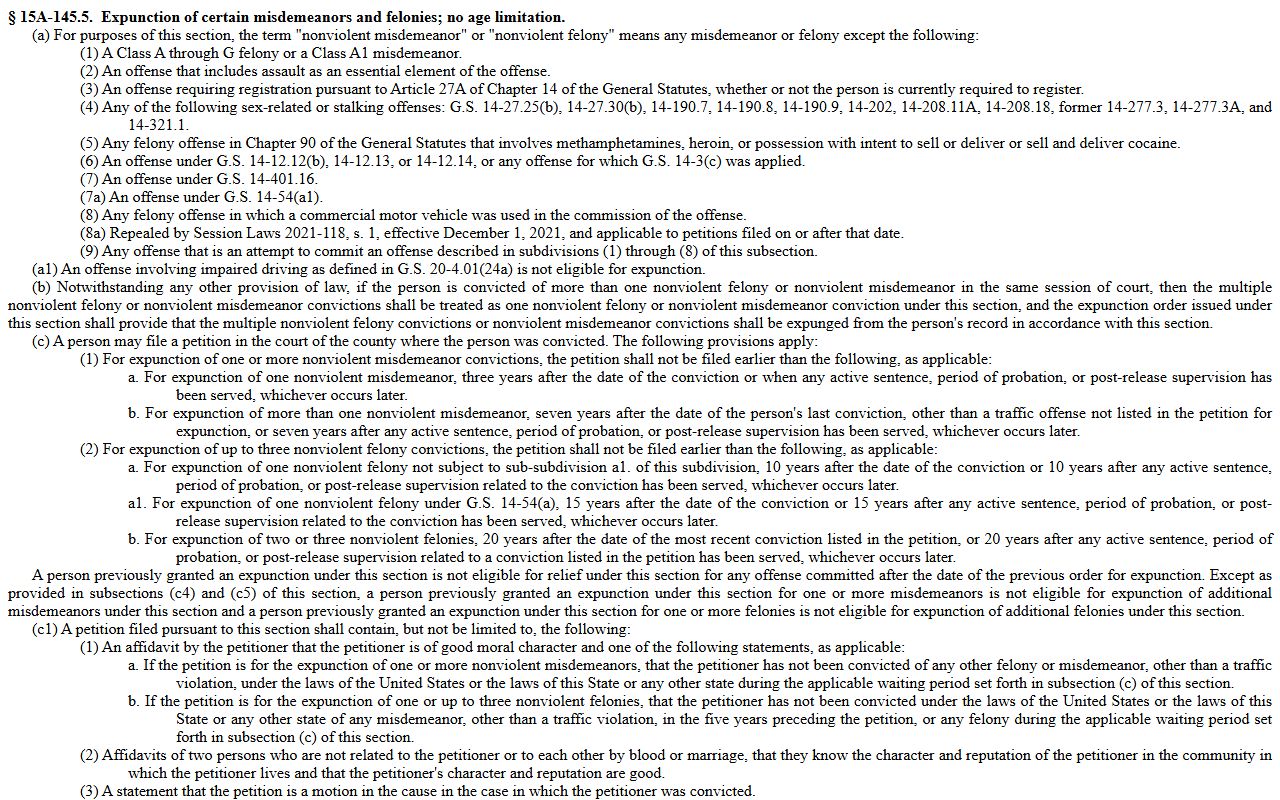
Eligibility should not be guessed from a search result alone because the statute excludes some offenses and requires waiting-period and conviction-history review.
Public Access and Restricted Criminal Records
North Carolina public-record law begins with G.S. 132-1, but criminal court records also follow court-specific rules. Ordinary public case information is available through Portal and the clerk where not restricted. Juvenile delinquency records are confidential under G.S. 7B-3000 and are not public criminal records. Search warrants tied to active investigations, sealed warrants, confidential victim data, protected addresses, adoption material, and mental health information can be unavailable or redacted.
Key Statutes:
G.S. 132-1 defines North Carolina public records broadly, subject to court-specific limits and confidentiality laws.
G.S. 7B-3000 makes juvenile court record information confidential rather than ordinary public criminal case data.
The juvenile confidentiality statute is included in the manifest because it sets a major boundary for criminal-record search copy.
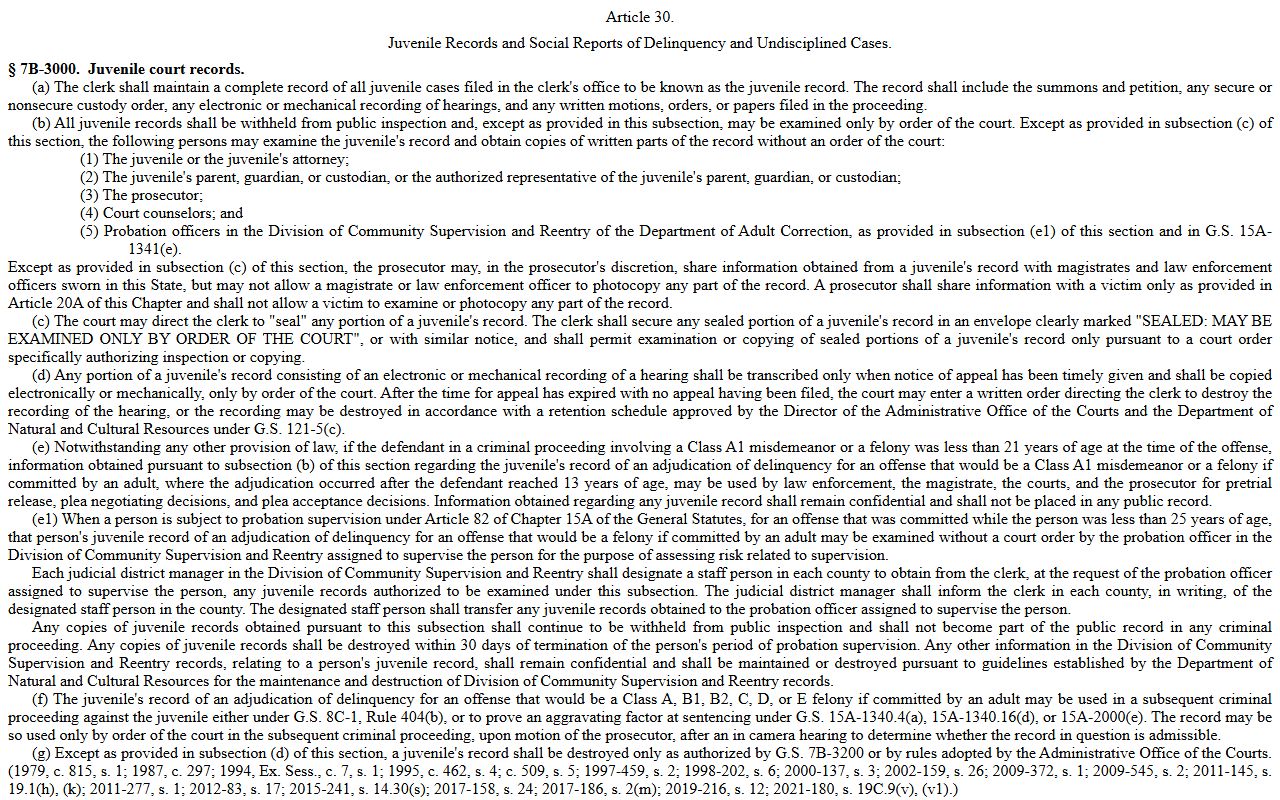
Do not treat juvenile delinquency results as if they were ordinary adult criminal case records.
Background Check Considerations
Public case searches are useful for confirming court activity, but they are not a substitute for a legally compliant background check. Name searches can return false matches, omit restricted records, miss older paper file details, or show charges without explaining their final disposition. A proper review should compare case number, date of birth when lawfully available from the official custodian, county, charge, disposition, and sentence. For employment, tenant, credit, insurance, or other FCRA-regulated uses, use an appropriate compliant channel rather than a casual public search.
Important: Public case lookup is not an FCRA consumer report and should not be used for regulated screening decisions.